If you want a person to become your lover the first rule is that you never promote somebody else over you or deny yourself.
A woman's face with
Nature's own hand painted
Hast thou, the master-mistress of my passion,
A woman's gentle heart, but not acquainted
With shifting change, as is false woman's fashion,
An eye more bright than theirs, less false in rolling,
Gilding the object whereupon it gazeth,
A man in hue, all hues in his controlling,
Which steals men's eyes and women's souls amazeth.
And for a woman wert thou first created,
Till Nature, as she wrought thee, fell a-doting,
And by addition me of thee defeated
By adding one thing to my purpose nothing.
But since she prick'd thee out for women's pleasure,
Mine be thy love, and thy love's use their treasure.
Sonnet #20
By stating the man's prick is (only) for a woman's pleasure he is promoting all women and in effect denying all men.
However since I was the bard and a woman it promotes first women and then me to the number one position over everyone.
So the bard was either a foolish man or a wise woman. We know the bard was wise so you draw the only conclusion that can exist.
Cool huh? (By the way what do you think of this proposition? It was totally outrageous for me to have made it but the Marquis was there only for the season and a Russian woman had her sights set on him. I use what works and will fill the bill.
If I had sat and waited it would have resulted in nothing, this way I had a chance and I would never regret not having given it my best try.
No it didn't work, she got to him but the proposition worked elsewhere and at other times with other men and it was needed at the time. This sonnet It sure tells you that the bard was a passionate woman and not a gay man as some think this sonnet implies.
This is all that is needed and it should be a solid proof given the bards reputation as being wise and not making foolish statements.
I'll say it another way that might makes more sense. (Queen Elizabeth's angel came by and told me this one.)
That's a woman's hat you are holding in your hand and I am a man but I want to wear it. It's awful tight and obviously not made to fit the 'head' of most men but I am interested in wearing it anyway.
However, this statement not only promotes women but by it's very natures also denies men as a potential lover for the man.
Then it follows the one statement about his penis being for a woman with out right proposal of being my lover (hey, the guy wouldn't make the first move with me so I had to do something!) I added to my proposition that the young man should get some of my 'woman's treasure' in return.
If the bard is a man there about 10 ambiguities in that sonnet but if we accept that the bard was a woman, then everyone of those ambiguities disappear.

Want another one?
Tenneson was made a Lord so why wasnt anybody at least knighted for having written those plays? If the bard was a man he would have been forced to take the honors as to accept the recognition from your country is as much for the country that recognizes the person as for the person who takes them.
A woman would have the only reason that would prevented her from accepting those honors. A woman could not accept them or the church would have burned her as they burned a million other, out of the ordinary women, as witches.
That is about four sentences to prove the Bard was a woman. I can add three more sentences that will disprove William wrote the plays. William spent a lot of time to get a family crest, in 1596, just to write the word 'Gentleman' after their names. It was all based on his grandfathers work for the king and if he wrote any of those plays he would never have bothered with a crest. He would have been offered a Lordship for writing those plays.
If you want some solid statements showing that I am the one that wrote those plays go read the explanation of 'Romeo and Juliet' as Mary Queen of Scots and the Earl of Bothwell.
No woman wrote anything original in the 16th century. Promoting learning among women as Queen Catherine Parr did before her husband, King Henry VIII died gave us Queen Elizabeth with brains but earned Catherine a death by poison after the King died. (It's called an 'alleged poisoning' today but if you were alive then there was nothing 'alleged' about that poison. There was enough found left in the cup to kill a dog that it was given to and the she dog did not allegedly die, it died very dead.)
Do this logic make sense to you? There are another two pages of proofs below. You will also find older versions of these two below and in greater detail.
If you are a 'sister' or a 'gay' man who wonders about their sexuality now rejoyce in the fact that the rest of us no longer have to wonder. This information sure makes it easier for most men to say they love the bard!
It never got to me that much when I was told he was gay, which was a long time ago. I realized even then that it was not the sex that caused the attraction. The Bard was full of love for all humanity and that is what I and you liked about them.
I'll tell you this, she was more agressive by far than most of the men around. Queen Elizabeth was the same and she herself said: 'I have a man heart and stomach.'
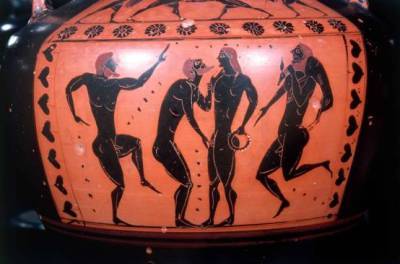
So let's not hear anymore about Etruscaniating art forms.
No masculine reference can be found (at least I haven't found any) in the first 150 Sonnets which are those that the Bard wrote. Then in three of the last four 'word groups' (they are not sonnets but they are called Sonnets 151-154) it's distinctly stated or implied that the bard is a man.
It is very typical of a man to let everyone know that he has a penis several times.* The fact that in the first 150 the bard doesn't mention it once should lead you to realize that the bard had no penis.
The question that needs asking is 'if Shakespeare wrote the plays that drew over three thousand people on a regular basis then why wasn't he honored for it?
Why aren't there hundreds of handbills and posters with his name across the top in big letters being sold on Ebay? The first thing on an ad for a Tom Clancy Movie is the name Tom Clancy. They would have used his name if he had written the plays. Where are they?
Where are the thousands of references to him in historical records from that time period. Not just a few that turned up fifteen or even two hundred years later that people say they found in attics, etc. Those are forgeries like these on exhibit at the Folgers Shakespeare Library?
We have hundreds of records of other, far lesser playwrights that were alive at the time like Marlow but not a single one about William Shakespeare. Relative to the amount of the known information about these lesser writers we should have hundreds of records of William Shakespeare.
We should have many paintings. We have lots of them of all the other greats of the Elizabethan era. We have 50 or more of Sir Francis Drake and so Shakespeare's place would have been assured. There should be at least 50 paintings and etchings of Shakespeare's in existence. There is not a single painting of him. Only two maybes. One painting, Sir William Davenant (who claimed to be the illegitimate son of William) pawned off on the Brits.

In order to accept this picture then we have to accept that the bard abandoned his son without giving him so much as his own name (or a mention in his will) to protect him. That means William was an immoral slime ball and not the kind of person who could have even written those plays.
It's a catch 22 of logic. Accept the statement of Sir William Davenant as hard fact and that makes William too immoral to understand the basis of the plays. Make William the moral person that wrote the plays and he would not have been the kind of person to have ever abandoned his own son to a 'bastard's fate'.
The real problem I have with this picture is that this man is probably a French Huguenot minister and not the Catholic lay person named William Shakespeare. Of course William could have stolen those clothes from a French Huguenot minister. That could actually be a Presbyterians minister clothes of the early 1600's. The point is that it is not what the bon vivant 'very Catholic' William Shakespeare would have ever worn.
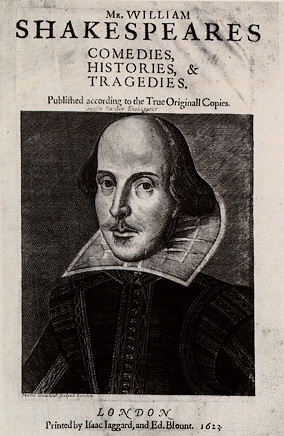
Then there is the front engraving of the 1623 issue of my plays. This had to have been a joke. It is of so poor a quality that it betrays the painter as an absolute amateur. His right arm protrudes from below and behind where his armpit should be. His right eye looks at you but the left looks at your right shoulder. His head is about 40% too large for his chest and the artist left out half the shadows. That collar was the style after 1607 (ruffles were in until about 1604). That man in the picture is 40 at the most and that is too young for that style of clothes. If William paid a cent for this painting he got ripped off more than the ripping off he gave me when those bastard kids of his stole the plays I wrote. William never claimed he wrote a single play so I am just upset at him for raising or not raising his children well. That brings me to another point.
Nothing in William's upbringing accounts for the bards real love of mankind. That kind of love is a product of honest and ethical parents.
His father John was a very corrupt politician. He was the burgess of the town and sold big time on the black market until he got busted for selling two hundred tons of the Queens wool. Do you realize how much wool that is? It's not from three sheep. That is almost a half million pounds or enough coats for about 1/10 the population of England and we are not talking about how much he got away with either. If he reincarnated as anything above an insect it's probably going to be some narco crime boss.
Then dad liquidated his holdings in England.
The more people dig up about that family the more they are going to be disappointed with him and happy with me. And I do mean murder most foul.
That kind of corruption is not what the bard was made of and that kind of thinking could never have resulted in the honest writings of the bard. Play writing is an act of magnanimous behavior. It's unselfishly exposes everything that is inside a person and it is a part of themselves. It uses words to expose what is inside instead of ink like this Rorschach Inkblot Test Test does.
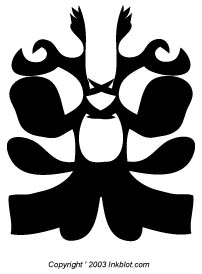
That ink blot is not too dirty of a picture is it? Good.
William's upbringing though is prime for one thing and that the production of a rip off artist like the one that took my plays.
William seems to have worked very hard to get his father a coat of arms based on his grandfather's service to England. So why didn't he not get at least a knighthood for the plays?
My direct ancestor was given one fifth of North Carolina as a land grant for helping England win a war. His name was Blount (but then another Blount ancestor signed the Constitution so maybe that nullified it. That seems to have been an accident. How does a person accidentally sign the Constitution of the United States? He raised his hand at what he thought was a role call at congress and it turned out to have been a vote for the Constitution. It's the same mess ups I often do too. The proof it was a mess up was that he got kicked out of congress a few years later for helping the English organize the Native Americans to fight the Spanish in Florida.)**
Another ancestor ended up being put in charge of Ireland (The Butler of Ireland) for his kicking Irishmen for England but then he liked the Irish and was sorry for it. I am also related on my mothers side to Sir Francis Drake who got knighted and then some for butchering more Spanish murderers of innocent Native Americans than any other person has in the last 800 years.
These were the Spanish that murdered 1 1/2 million Native Americans for their gold and tried to make the English culpable by forcing them to practice the religion that endorsed the murders. (What did you think was the inner spiritual power that drove the Protestant movement?)
I guess my family has a pretty colorful bunch of English genes.
If William wrote those plays they should have put him above Lord Tennyson, whose writings were crap by comparison. They were very dangerous writings. Like 'The Charge of the Light Brigade'.
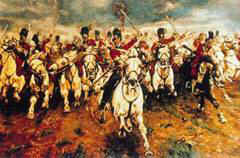
That one should have been outlawed when they invented the repeating rifle. It made dead about a quarter million good Englishmen who got inspired by it to run headlong into a certain death created by the crossfire of German machine guns in WW1 and WWII. Yet those inane words earned him a lordship***.
William would not have even bothered with a coat of arms in 1596 if he was the writer of the plays. He would have gotten far more given to him by the Queen.
The real bard definitely deserved better than Tennyson. Think people, why didn't England honor this great man whose plays were so popular at the time? It's obvious he wasn't the person who wrote those plays.
That leaves us with a big question? Who on earth would have avoided all those accolades? It not would have promoted the bard but also the country of England. Only a person who would have faced death with the exposure of their identity would have dared incur the wrath of the Queen by not accepting their deserved accolades.
There was half the population that simply could not accept those rewards. That was female half. Only a woman would have refused the recognition and the benefits that such recognition would have provided her because it would have also meant her death as a witch.
Let's look at it from another other direction. If a woman did anything out of the ordinary at that time in history she was burned as a witch. Women who just recited scripture were burned as witches when the Catholics were in charge and if they translated scripture if Protestants were in charge. There were only a few that were killed at the time of my life but one was the exqueen Katherine Parr and that was a big warning. Then you never knew which way the whole thing was going to swing next year the year after that and who and what church was going to be running the show. Since Queen Elizabeth had no children the odds were two to one that France would take over. That would have been it for the bard for certain.
The churches also hated the plays because the people spent what little money they had on the plays. The plays taught morality in a way that people understood and respected. The churches were jealous as 'hell' over that fact alone. In 1642 the Quakers shut the Globe Theater forever (until it was rebuilt in the 1990's).
During that one century and a half over a million people, mostly women, were killed as witches throughout Europe. Protestant England was not an exception. In just one mass execution in the 1640's over 100 hundred alleged witches were killed.
Here is a more personal view of this aspect which I wrote about a month before this page.
I recall that man William.
He never claimed to have authored the plays, only his kin did and it was much later. I have no idea why people are so certain his children were truthful. That is all anybody can base it on.
His kin simply saw an opportunity to make money ten or so years after his death by stealing and publishing my plays under his name at a time before copy write laws even existed. It was safe for them to claim that he had written the plays. He was dead. If they were ever accused of stealing the plays they would just claim William said he was the author and that would be the end of it.
William's main mode of operation was to seduce women over a period of several months or even a year and then get them to invest in ventures such as shipping that he would benefit from, usually by skimming. He got started with his first marriage to a 26 year old when he was only 18.
We had the theater going a long time before William ever showed up in his carriage. We had been in production for a few years when the Spanish Armada (which became 'The Tempest)' was sunk in 1588. At the time of the first plays William had two new daughters and he didn't abandon his wife to go 'play' in London. William bought part ownership later from a man whose wife wanted him to get away from the single women that wanted the actors 'services'.
The men involved with the theater were usually involved with it in a large part to get ahead in the world when there were few other opportunities for advancement.
In England women who were single and wealthy usually lived part of the year in London. This included many women from other parts of Europe. Often about 700 out of an audience of 3000 were single women. Of those about 150 were also wealthy. Most of the actors in the troop married up within two years of starting to act with the troop. Then William came to town and started to hustle the women very hard. William was a shady character and he had a aggressive nature and I was told he had a very violent streak.
His opportunities were more limited (He was older and I think he was still married and had young children). His violence manifested when drinking. Before we realized it William was out of the picture. He was a minor person in the scheme of things.
Even the queen did not like him and that is common knowledge. There are many stories about him that are derogatory but I don't give them credit. Why do I give this one credit and not the others? You can pretty much believe this story because it involves the queen and her attitude towards someone. People could lie about anything except the queen. If you lied about the royal family you ended up with your head cut off.
William was a pretty shady character and landed in London because he got caught poaching the mayor's deer. He left London for poaching authorship of my plays. The actual poaching incident really happened because I recall it clearly. He was pretending he was Robin Hood and bragging on and on about it. I was standing there just thinking to myself 'This man has two little girls, a wife, a good family and quite a bit of money. What did he do that for? Those little girls have to live with that stain on them in that small town.'
The whole point of honor was the fact that those 'robbing hooded' men were keeping people from starving to death. This William Shakespeare put his life and his family in jeopardy to steal deer for his family when he had the money to buy whatever food he needed. Then when he got caught he tried to live off that reputation. He missed the whole point because he was wealthy and he never helped anyone.
His kids were defenseless children that the other children in town were mean to. When there was a festival the mayor usually killed a deer and contributed it to the banquet. With William killing them there were no deer at the festival for several years so the town hated him and his little girls. That is when William left and came to London and his family got the brunt of the townspeople's anger. He went on bragging about it for years. Can you imagine somebody doing that to their family?
I kept that little skinny William at bay but he sure was nuts about me, hence the name of this site Shakespeare's love.
Shakespeare, at the time of the first plays would have been in his twenties and in a little village he had no access to such information as the Bard had about customs in Europe. The real bard was a person who had many worldly experiences and much knowledge of the rest of the world. That does not come from a still growing child in an isolated village in the countryside of England.
There is also the fact that most men who write can't begin to understand their own emotions (even a Hemingway couldn't) so they never could have understood the emotions of every single character in a play, at all times. The Bard easily could though.
A young man in his twenties living all his life in a small community with at the most a fifth grade education (and that is unknown) did not gain that information from the fish in the river. Many people who never write look at this as a weak argument but if you are a writer then you know exactly what I am talking about when I say that a person has to have experiences to write anything of interest to anyone else.
Most people refer to his lack of education as showing that he had not the skill to write much of anything. This is very true however the most indicting thing is this. To have written the plays and abandoned those two daughters is not the same ethics as those of the person who wrote the plays. No, he did not abandon them to my knowledge but neither did he write the plays.
THE END
*Didn't you ever wonder why with everything that was written by the Bard there is not one solid indication that the bard was a man? With any other writer you will learn what their sex is every three pages because of some references to his beard, or his being a man or even his sex organ. It's not anywhere in any of the works attributed to the bard, except for three of the last four sonnets.
In those it is suddenly mentioned four times. The last four sonnets 150-154 were on one piece of paper that was sewn into the book later on so they could claim it as a 'new edition' with newly discovered sonnets.
They did virtually the same thing in Barletts Quotes. My public library has editions 14 and the 'enlargened' 15th edition. You might have them too and can verify this next part.
The 14th has the index in the center and it lists Queen Elizabeth I as 'Elizabeth I, Queen of England'. Her listing is found in the index after 'Elizabeth Queen Mother' and 'Elizabeth Queen of Belgium'.
The 15th edition is about an inch larger on each side and the index in the front of the book. In it, Queen Elizabeth I is listed as 'Elizabeth I,' (no Queen mentioned) and it appears before the listing of 'Elizabeth Queen Mother' and 'Elizabeth Queen of Belgium'.
Now what do you think are the actual changes that have been made in the content of the Queen Elizabeth I entry going from the 14th edition which has 11 Queen Elizabeth quotes to the larger 15th edition?
Zero, zip, none and nil differences. They moved the index in the book and made it physically larger but Queen Elizabeth's quotes are exactly the same ones as in the previous edition. It got our librarian to order a new edition so it still works after 400 years.
It implies or states the sex organ of the bard several times in sonnet 151. Twice it actually describes his erection (in case you don't think he has one I guess) but never is it mentioned in the first 150 sonnets. And nowhere else in all the sonnets is his beard or even a little mustache even alluded to.
In 1591 there was at least one
printer in London making forgeries of books they claimed to have been printed
in Italy and others printers were forging other works in London at the time.
The printing press was pretty new and to my knowledge no copy write laws were
in existence then.
CLI
Love is too young
to know what conscience is,
Yet who knows not conscience is born of love?
Then, gentle cheater, urge not my amiss,
Lest guilty of my faults thy sweet self prove:
For, thou betraying me, I do betray
My nobler part to my gross body's treason;
My soul doth tell my body that he may
Triumph in love; flesh stays no farther reason,
But rising at thy name doth point out thee,
As his triumphant prize. Proud of this pride,
He is contented thy poor drudge to be,
To stand in thy affairs, fall by thy side.
No want of conscience hold it that I call
Her love, for whose dear love I rise and fall.
This was an addition that was paid for by the publisher to make a new addition. Apparently the writer did not even know how to write Sonnets. He asked some one and they told him the rules. All except the last two lines rhyme alternately, then the last two lines rhyme. These are the sentences that rhyme: 1&3, 2&4, then 5&7, 6&8, then 9&11, 10&12, followed by 13&14. I think the writer was French and did not know English well at all. Why do I say this? He knew that when the last letters in words are identical they usually rhyme. So he went by the spelling and not the pronunciation of the words. The last words of 1 &3 are 'is' and 'amiss'. Well that is pretty close to the same spelling but they never rhymed and they never will rhyme. It's the same thing with 2 & 4. The last three letters of the words 'Love' and 'Prove' are identical but do they rhyme? No. This form of sonnet is called a Shakespeare Sonnet so the bard knew what he was doing. What the bard didn't know was what this Frenchman was going to do 15 years later.
Two of the four last sonnets refer to the bards 'mistress' but that is it for the sonnets.
CLIII
Cupid laid by his
brand and fell asleep:
A maid of Dian's this advantage found,
And his love-kindling fire did quickly steep
In a cold valley-fountain of that ground;
Which borrowed from this holy fire of Love,
A dateless lively heat, still to endure,
And grew a seething bath, which yet men prove
Against strange maladies a sovereign cure.
But at my mistress' eye Love's brand new-fired,
The boy for trial needs would touch my breast;
I, sick withal, the help of bath desired,
And thither hied, a sad distempered guest,
But found no cure, the bath for my help lies
Where Cupid got new fire; my mistress' eyes.
CLIV
The little Love-god
lying once asleep,
Laid by his side his heart-inflaming brand,
Whilst many nymphs that vowed chaste life to keep
Came tripping by; but in her maiden hand
The fairest votary took up that fire
Which many legions of true hearts had warmed;
And so the General of hot desire
Was, sleeping, by a virgin hand disarmed.
This brand she quenched in a cool well by,
Which from Love's fire took heat perpetual,
Growing a bath and healthful remedy,
For men diseased; but I, my mistress' thrall,
Came there for cure and this by that I prove,
Love's fire heats water, water cools not love.
Oh 'La Dee Daa' and how simplistic. Do you think that the bard might have realize what was going to happen to the sonnets and so stopped at a round number like 150 sonnets, just to avoid the problem of people believing someone when they added four sonnets of la dee daa's to 150 of beauty.
What else could I have done when I was the bard to keep people from accepting those last four? Somebody took a book with 150 nice sonnets and added one piece of paper which makes two pages that contain four imitation bard sonnets so they could sell thousands of books with newly discovered sonnets, each of which make less sense than any of the other 150 sonnets and everybody with their greed just swallows it as gospel-of-the-bard.
If I or you showed up with a 154 of anything like sonnets and wanted to get them published the first thing the editor would say is 'Can't you take out four of them and make it an even 150?' If five editors had to sit down and take out the least four of those sonnets, guess which ones they would take out?
The last four are not even the same style as the real ones, they go no where and they totally lack any depth or understanding. These are just a gross bawdy half poems. The most interesting part of is that the English is totally unfamiliar to me. I'm familiar with 21st century American and English as well as 1590's 'Middle Class England English'. Any English written between those years is as foreign to me as it probably is to you.
These last four sonnets are more recent than 1610 and are of a Low Class English. The English is very strange. Not a form I am familiar with.
**North Carolina
William Blount (1749-1800)
Although he signed the Constitution, that action was taken just to prove that
he was "present". He supported its ratification because it would
help western expansion and he used various elected positions to gain land
for his own economic advancement. Blount served as state senator (1788-1790),
Governor of the territory south of the Ohio River (1790), president of the
Tennessee constitutional convention (1796) and as a United States Senator
from Tennessee (1796-1797). Blount was involved in a conspiracy for inciting
the Creek and Cherokee Indians to collaborate with the British Fleet in attacking
Spanish Florida and Louisiana. Based upon these charges Blount was impeached
by the House of Representatives and expelled by the Senate in 1797. He returned
to Tennessee and served in state senate."
***I prefer these more cautious words by Kipling. They are a lot less glorious but much more realistic.
When you’re wounded and left
on Afghanistan’s plains,
And the women come out to cut up what remains,
Jest roll to your rifle an’ blow out your brains
An’ go to your Gawd like a soldier.
Rudyard Kipling (1865–1936),The Young British Soldier, Barrack-Room Ballads
(1892).
All rights reserved. © J Pinil, Inc. 2004